
When selecting an AC DC power adapter for electronic equipment, one of the most common questions is whether a desktop power adapter or a wall mount power adapter is the better choice. Both types perform the same basic function—converting AC mains electricity into stable DC power—but they differ significantly in design, power capability, thermal performance, installation convenience, and end-use applications.
As electronic devices become increasingly specialized, choosing the correct power adapter is no longer simply about matching voltage and current ratings. Engineers, product designers, distributors, and OEM manufacturers must consider factors such as safety certifications, efficiency standards, heat management, cable routing, and user experience.
As a professional power supply manufacturer, Guangdong QINX Technology Co.,LTD. provides both desktop and wall mount power adapters ranging from low-power consumer products to high-power industrial and battery charging solutions. Understanding the differences between these two adapter styles can help ensure optimal system performance and long-term reliability.
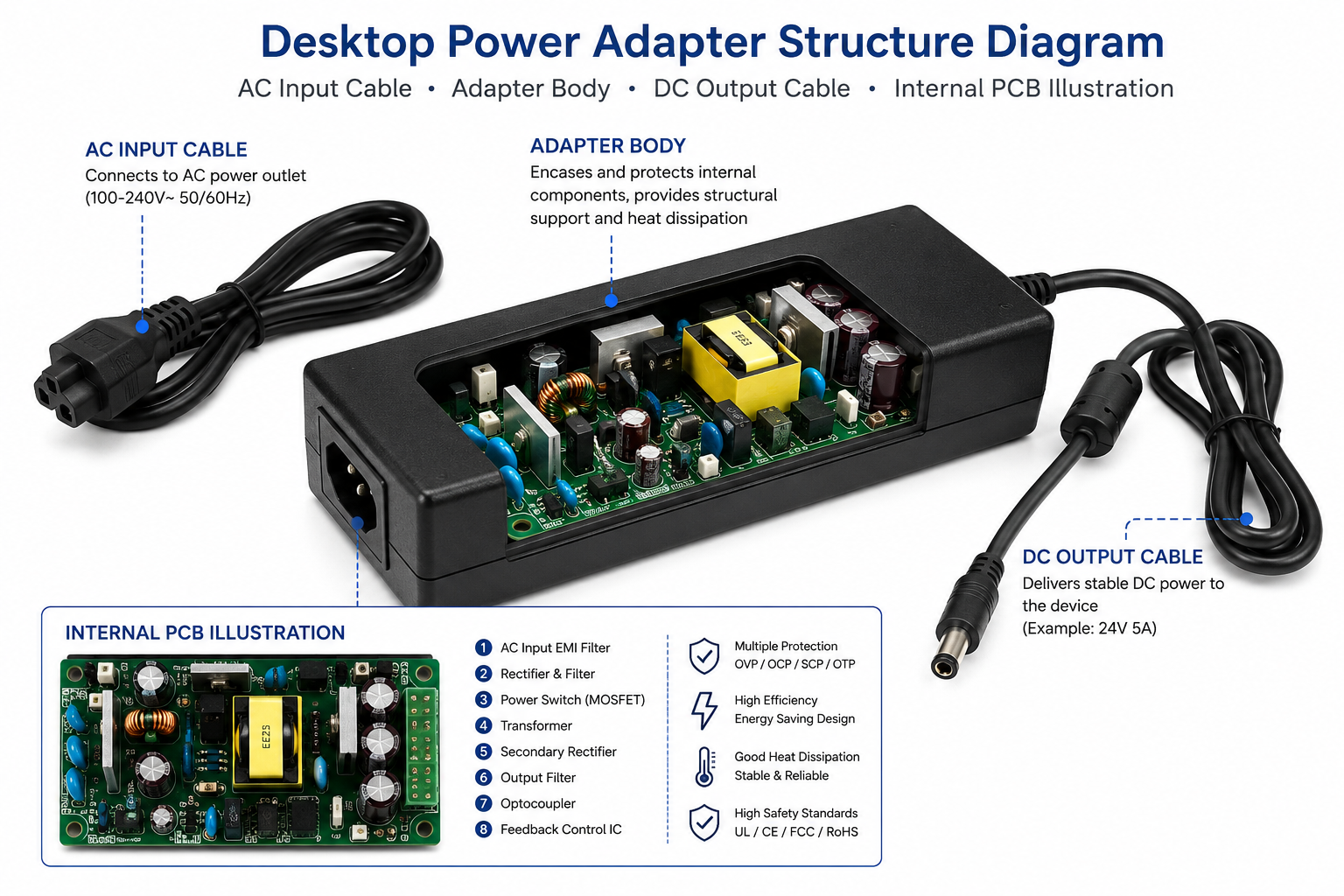
A desktop power adapter, often called a desktop power supply or external power brick, is a standalone unit connected to the AC outlet through a detachable power cord.
Typically, desktop adapters consist of:
AC input socket (IEC C6, C8, C14, etc.)
Internal power conversion circuitry
DC output cable
Plastic enclosure designed for desk or floor placement
Because of their larger housing size, desktop adapters can accommodate more electronic components and better thermal management systems.
Most desktop adapters are available from:
Many industrial and battery charging applications rely on desktop adapters due to their higher power handling capability.
Medical equipment
Industrial automation systems
Security monitoring systems
Communication equipment
LED lighting systems
Networking devices
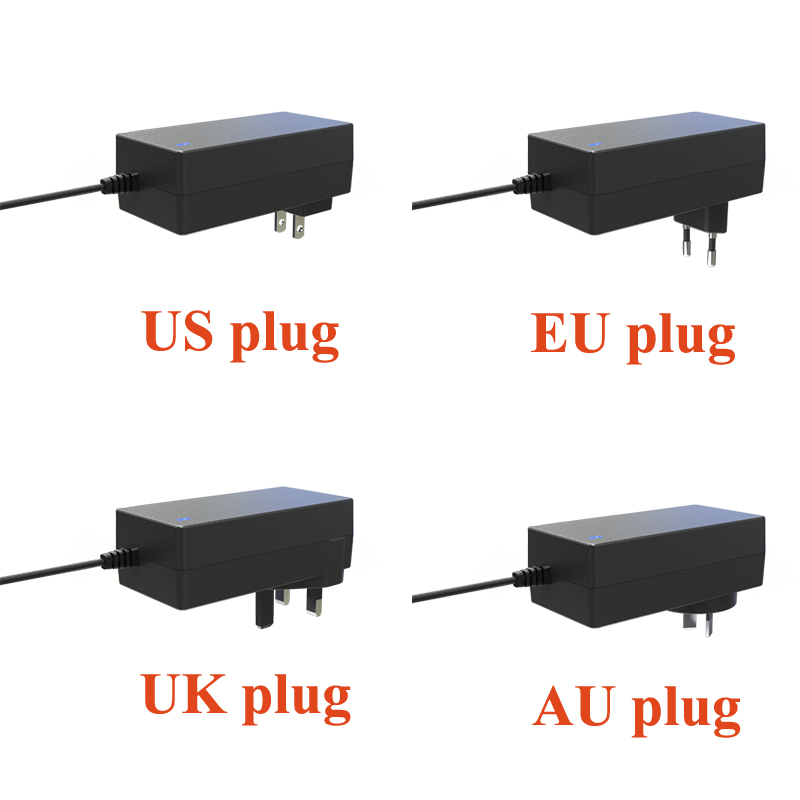
A wall mount power adapter integrates the AC plug directly into the adapter housing. Instead of using a separate AC cable, the adapter plugs directly into the wall outlet.
This design creates a compact and user-friendly solution for lower-power electronic devices.
Common plug standards include:
US plug
EU plug
UK plug
AU plug
JP plug
KR plug
Wall mount adapters are widely used in consumer electronics where portability and simplicity are priorities.
Most wall plug adapters are designed between:
Although higher wattage models exist, mechanical limitations generally restrict wall mount designs from reaching the power levels achievable by desktop adapters.
Wi-Fi routers
Set-top boxes
Smart home devices
Portable speakers
Consumer electronics
Security cameras
Small LED lighting products
One of the biggest differences is power output capability.
Desktop adapters offer significantly higher wattage because their larger enclosure allows:
Larger transformers
Bigger capacitors
Better MOSFET cooling
Enhanced EMI filtering
Typical comparison:
For applications requiring over 60W, desktop adapters are often the preferred solution.
Heat management directly impacts power supply lifespan.
Desktop adapters have:
Larger ventilation area
Better airflow
Lower thermal density
Wall mount adapters:
Smaller enclosure
Higher thermal concentration
Limited cooling capability
As a result, desktop adapters generally achieve longer service life under continuous operation.
A 120W adapter operating 24 hours per day:
Desktop adapter: lower internal temperature
Wall mount adapter: significantly higher temperature rise
For industrial applications requiring continuous duty cycles, desktop designs are usually recommended.

Wall mount adapters excel in ease of installation.
Advantages include:
No additional AC cable
Reduced packaging size
Easy plug-and-play operation
Lower shipping volume
Desktop adapters require:
AC power cord
Additional space placement
However, desktop adapters provide greater flexibility when the power outlet is far from the device.
Safety certifications are critical when selecting power supplies.
Guangdong QINX Technology Co.,LTD. manufactures products that can comply with:
UL
cUL
CE
UKCA
SAA
PSE
FCC
RoHS
CB
Desktop adapters often have an advantage in safety performance because larger internal spacing can improve:
Creepage distance
Clearance distance
Isolation design
This becomes especially important for medical and industrial equipment.
Cable arrangement differs significantly.
Desktop Adapter:
Advantages:
Longer AC cord options
Easier equipment placement
Better cable routing
Wall Mount Adapter:
Advantages:
Fewer cables
Cleaner appearance
Disadvantages:
Can block adjacent outlets
May loosen in worn wall sockets
For global product sales, power adapter flexibility is essential.
Desktop adapters allow:
Region-specific AC cables
Universal adapter platform
Simplified inventory management
Guangdong QINX supplies desktop adapters supporting:
US plugs
EU plugs
UK plugs
AU plugs
JP plugs
KR plugs
IN plugs
This flexibility is particularly useful for OEM and ODM projects serving international markets.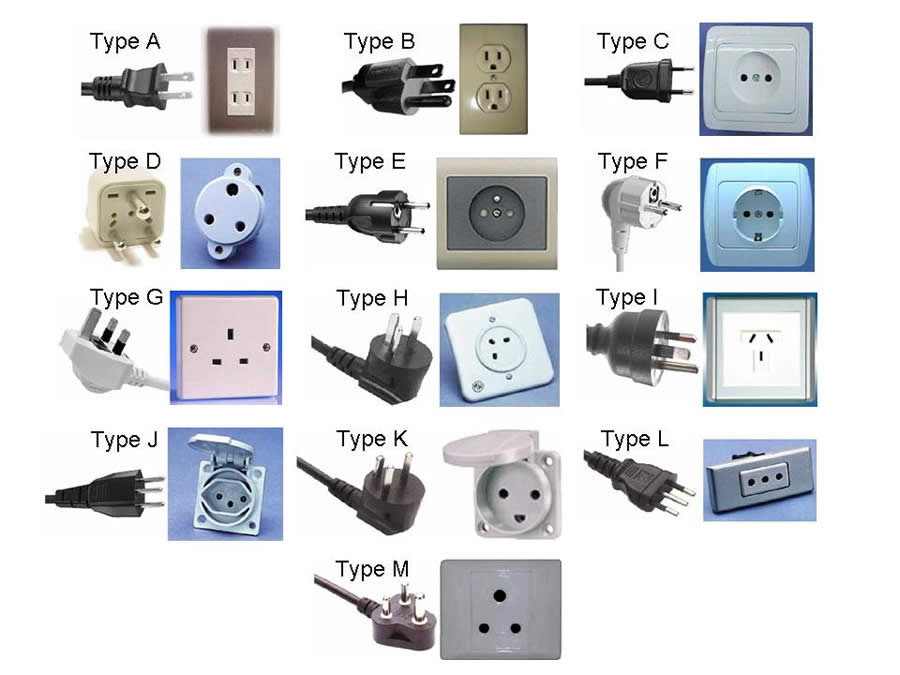
Desktop adapters dominate in:
Applications include:
Lithium-ion battery chargers
LiFePO4 battery chargers
E-bike battery chargers
Portable energy storage systems
Higher charging currents require larger power conversion components.
Industrial devices often run continuously and demand:
Stable output
Low ripple
Long lifespan
Desktop power supplies are better suited to these requirements.
Medical electronics often require:
Enhanced isolation
Low leakage current
High reliability
Desktop adapters provide more design flexibility to meet these standards.
Wall mount adapters are commonly selected for:
Routers
Modems
Repeaters
Smart speakers
Small appliances
Security accessories
IoT sensors
Gateways
Controllers
Their compact form factor reduces manufacturing costs and improves user convenience.
Many buyers assume wall mount adapters are always cheaper.
In reality, costs depend on:
Power level
Certification requirements
Housing design
Production volume
At lower wattages:
Wall mount adapters often cost less.
At higher wattages:
Desktop adapters become more economical because thermal and mechanical challenges increase dramatically in wall mount designs.
Consider the following questions:
✓ Power exceeds 60W
✓ Long operating hours are required
✓ Industrial applications are involved
✓ Battery charging applications are involved
✓ Better thermal performance is needed
✓ Global AC cable flexibility is important
✓ Power is below 60W
✓ Compact size is important
✓ Consumer products are targeted
✓ Ease of installation is a priority
✓ Cost reduction is required
Why OEM and Custom Power Adapter Solutions Matter
For many equipment manufacturers, selecting between a desktop adapter and a wall mount adapter is only part of the decision process. In many cases, standard off-the-shelf products cannot fully meet the electrical, mechanical, or branding requirements of the final product.
This is where OEM power adapter and custom power adapter solutions become important.
An OEM power adapter is designed and manufactured according to the specifications of an equipment manufacturer and supplied under the customer's brand.
OEM services may include:
For companies selling products globally, OEM power adapters help create a consistent brand experience while maintaining regulatory compliance in different markets.
A custom power adapter goes beyond branding and involves modifications to the electrical or mechanical design.
Typical customization options include:
Many industrial automation systems, battery-powered devices, and specialized equipment require custom power adapter designs to achieve optimal performance and reliability.
Custom Power Adapter Manufacturing
As an experienced power supply manufacturer, Guangdong QINX Technology Co.,LTD. provides both OEM and custom power adapter services for customers worldwide.
QINX supports:
Customers can choose from existing platforms or request customized solutions based on their application requirements.
Guangdong QINX Technology Co.,LTD. specializes in AC DC power adapters and battery chargers for global OEM and ODM customers.
Our product range includes:
Wall mount adapters
Desktop power adapters
Open frame power supplies
Lithium battery chargers
LiFePO4 battery chargers
Available features include:
100-240V universal input
DOE Level VI efficiency
Optional DC connectors
Custom cable lengths
Global safety certifications
Private label manufacturing
With years of experience in power conversion technology, Guangdong QINX continues helping customers develop reliable power solutions for consumer, industrial, and battery-powered applications.
Both desktop and wall mount power adapters serve important roles in modern electronics. Neither design is universally superior—the best choice depends on power requirements, thermal performance expectations, installation preferences, and target applications.
For low-power consumer products, wall mount adapters offer simplicity and convenience. For higher-power equipment, battery charging systems, and industrial applications, desktop power adapters provide superior thermal management, flexibility, and reliability.
By evaluating your project's electrical and mechanical requirements carefully, you can select the adapter design that delivers optimal performance and long-term value.
Contact us for more information.


